A successful flower growing greenhouse is not just a structure that keeps plants under cover—it is a climate tool. For rose farming, that matters even more because roses respond quickly to small changes in temperature, humidity, airflow, and light. In commercial production, these changes affect stem length, bud formation, disease pressure, harvest timing, and overall consistency. Many growers learn this the hard way: the greenhouse looks strong and the crop variety is good, yet yields fluctuate because climate is uneven across the house. The difference between an average rose greenhouse and a strong one is often not the size of the farm, but how well the environment is designed and controlled.
Why Roses Need a Controlled Greenhouse Environment
Roses are grown worldwide, but commercial rose farming often faces the same core challenges:
daytime heat stress that slows growth
cool nights that delay development
high humidity that increases disease risk
poor ventilation that causes uneven microclimates
strong sun that can stress plants or reduce quality
A greenhouse helps because it reduces extremes and gives growers tools to adjust conditions rather than simply react to the weather. The goal is not to create a perfect laboratory climate, but a stable growing zone that supports predictable growth.
Climate Requirements for Rose Farming in a Greenhouse
While exact targets vary by variety, region, and production goals, rose greenhouse management usually focuses on four climate factors:
A Temperature
Temperature is central to growth rate, flowering cycles, and stem quality.
Practical temperature considerations:
daytime temperature should support steady photosynthesis and growth
nighttime temperature influences development speed and bud formation
large day-night swings can create stress or uneven growth
B Humidity
Humidity is closely linked to disease pressure and plant transpiration.
High humidity can:
increase risk of fungal disease
reduce leaf drying speed after irrigation
create condensation on leaves and greenhouse surfaces
Low humidity can:
C Ventilation and airflow
Ventilation is not only for cooling. It is a disease management tool and a consistency tool.
Good airflow helps:
D Light management
Roses need strong light for quality growth, but excessive radiation can increase stress, especially in hot climates.
Light strategies often include:
shading systems for peak sun
greenhouse orientation and roof design
using cover materials with suitable light transmission
Greenhouse Structure Choices for Rose Farming
Not all greenhouses perform the same, even with similar equipment. Structure design influences ventilation effectiveness, climate stability, and long-term maintenance cost.
A Multi-span vs single-span
For commercial rose farms, multi-span designs are often preferred because they:
provide more stable internal climate
improve space efficiency
support easier equipment installation
reduce the edge effect of wind and temperature variation
B Gutter height and volume
Higher greenhouse volume generally makes climate control easier because:
For rose farming, taller structures often support more stable climate behavior, especially in warm regions.
C Orientation
Greenhouse orientation affects:
Growers often choose orientation based on local sunlight angle and wind patterns.
Ventilation Design Tips That Improve Rose Quality
Ventilation is one of the most important design factors for a flower growing greenhouse.
Key ventilation design tips
use roof ventilation where possible to remove hot air effectively
plan side ventilation and insect netting carefully to balance airflow and pest control
ensure ventilation openings are distributed evenly across spans
avoid dead zones where air movement is low
Practical airflow checklist
are there areas where leaves stay wet longer?
is the greenhouse hotter at one end than the other?
does humidity collect around corners or near walls?
is the airflow blocked by internal partitions or improper layout?
If these issues exist, ventilation design adjustments often improve consistency more than adding more irrigation or fertilizer.
Humidity Management Strategies for Rose Greenhouses
Humidity control is one of the biggest differences between stable rose production and unpredictable disease pressure.
Practical humidity strategies include:
ventilate early enough to prevent morning condensation
use airflow fans where needed to reduce microclimates
manage irrigation timing to avoid long wet leaf periods
avoid over-dense planting that blocks airflow
Humidity risk table
Issue | What It Often Causes | Practical Prevention |
Condensation on leaves | higher disease risk | early ventilation + airflow balance |
Poor airflow in canopy | uneven growth + humidity pockets | spacing + circulation fans |
Over-irrigation timing | wet surfaces for long periods | adjust irrigation schedule |
Blocked ventilation pathways | hot and humid zones | review internal layout |
Cooling and Heat Control Design Options
In hot climates, controlling peak temperature is a major challenge. Roses can continue producing, but quality can decline if stress becomes frequent.
Common cooling design options:
roof ventilation with good opening ratio
shading systems for peak radiation periods
fogging or mist cooling (where suitable and well-managed)
circulation fans to prevent heat pockets
proper cover material selection
The key is balance. Cooling methods that increase humidity without ventilation can create a new disease problem. That is why cooling should be designed together with ventilation, not separately.
Heating and Night Climate Stability
In cooler climates or high-altitude regions, heating may be needed to maintain stable growth and consistent production cycles.
Practical heating design considerations:
focus on maintaining stable night conditions
avoid temperature shock between day and night
ensure heating distribution is even across zones
avoid creating hot spots near heaters while other areas remain cool
Even if heating is limited, simple thermal strategies such as better greenhouse sealing, thermal curtains, and improved structure insulation can improve stability.
Layout Tips for Efficient Rose Greenhouse Operation
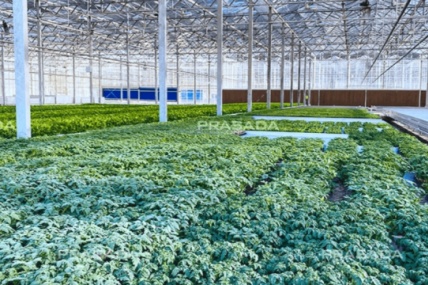
A flower growing greenhouse is not only a climate space—it is a working factory for flowers. Layout affects labor efficiency and harvest consistency.
Practical layout design tips
plan bed width for easy access and consistent plant care
ensure enough aisle width for carts and harvest movement
design irrigation lines and drainage for easy inspection and repair
plan service corridors for equipment maintenance
ensure uniform plant spacing for airflow and light balance
Layout planning table
Layout Element | Why It Matters in Rose Farming |
Bed spacing | affects airflow and disease pressure |
Aisle width | affects harvest speed and labor efficiency |
Irrigation access | simplifies maintenance and reduces downtime |
Drainage planning | prevents root zone stress |
Uniform canopy height | supports consistent light distribution |
A well-planned layout improves both production management and climate stability.
Cover Material Considerations
The greenhouse cover influences:
Different climates often require different cover strategies. A good cover choice supports both plant comfort and operational cost control over time.
A Practical Design Checklist Before You Build
Before finalizing a greenhouse design for rose farming, we recommend checking:
What is the local climate profile (heat, humidity, wind, rainfall)?
What is the seasonal temperature range and day-night swing?
What disease pressure is common in the region?
What ventilation strategy matches the site wind conditions?
Is the greenhouse volume and height adequate for stable airflow?
What cooling and shading strategies are realistic for the budget?
Is the internal layout efficient for daily harvest and maintenance?
These questions help ensure the greenhouse supports rose production in real conditions rather than being a “standard structure” that struggles under local weather stress.
Final Thoughts
A greenhouse for rose farming is most successful when it is designed as a climate system, not just a shelter. Roses respond strongly to temperature stability, balanced humidity, reliable airflow, and light management. When these factors are supported through thoughtful greenhouse structure, ventilation design, and practical layout planning, growers often see more consistent production, easier disease management, and more predictable harvest routines. A good flower growing greenhouse is one that makes daily management simpler and reduces seasonal surprises.
At www.prasadaa.com, we support growers and project teams who want greenhouse solutions designed for real production needs. If you are planning a new greenhouse for rose farming or upgrading an existing structure and want practical guidance on climate requirements and design options, you are welcome to learn more from www.prasadaa.com and contact us for further information.
FAQ
1) What climate factors matter most in a greenhouse for rose farming?
Temperature, humidity, ventilation airflow, and light management are the main factors that influence rose growth consistency and disease pressure.
2) Why is ventilation so important in a flower growing greenhouse?
Ventilation helps remove heat, reduce humidity pockets, prevent condensation, and keep the rose canopy climate more uniform across the greenhouse.
3) Do roses need shading inside a greenhouse?
In hot or high-radiation regions, shading can help reduce stress during peak sunlight hours and support more stable daily conditions.
4) What greenhouse design features improve rose production stability?
Higher greenhouse volume, effective roof ventilation, balanced airflow distribution, and a practical layout for spacing and maintenance often improve stability.


